
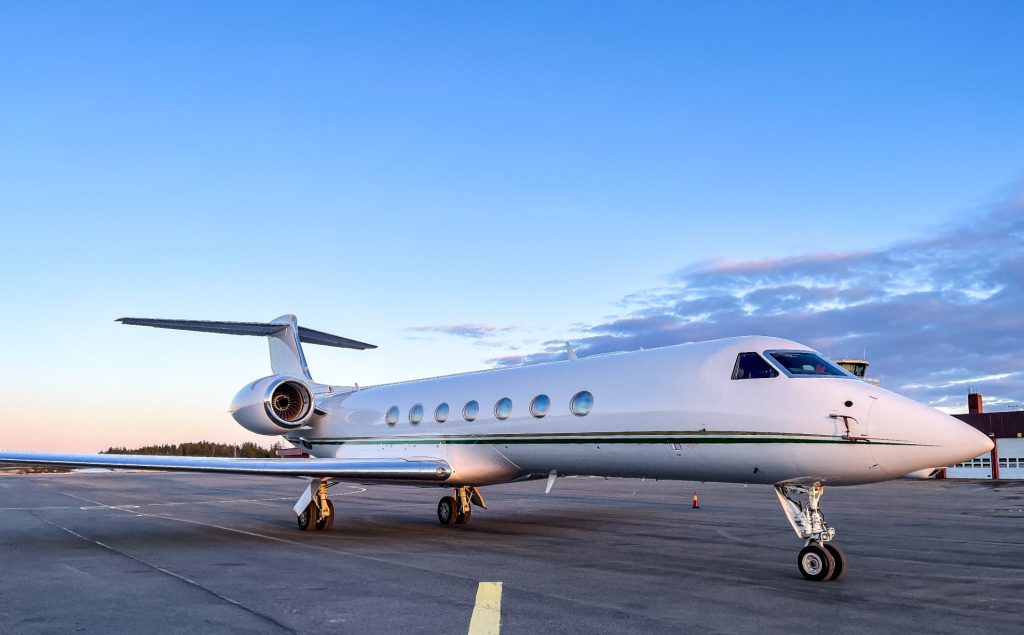
The New Era of Private Aviation: How the World’s Wealthiest Are Flying in 2026
Private aviation has changed shape in the past decade, and not simply in terms of range or cabin size. The aircraft themselves have become quieter, longer-legged and more capable of connecting cities that commercial routes have never linked directly. What has changed alongside them is expectation. A private flight is no longer judged only on comfort, but on what it makes possible.
The Aircraft Setting the Standard
Gulfstream’s G700 has become something of a benchmark for the category it competes in, offering a cabin tall enough to stand in fully and a range capable of connecting London to Singapore without stopping to refuel. Bombardier’s Global 7500 approaches the same challenge from its own perspective, built around a similar promise: fewer stops, more usable cabin space, and a genuine dedicated suite rather than simply a seat that reclines. At the other end of the spectrum, Dassault’s Falcon range has built its reputation on a different priority entirely, aircraft designed to land on shorter runways and reach airports that larger jets simply cannot use. For clients whose destinations include private islands, smaller regional airports or locations with limited infrastructure, that capability often matters more than outright range.
Ultra-Long-Range as the New Standard
What was once considered exceptional, flying from one side of the world to the other without a fuel stop, is increasingly the expectation rather than the exception among the newest generation of aircraft. This has quietly reshaped how private aviation is used. A single flight can now replace what would previously have required a stop in a third country, removing hours from a journey and, more importantly, removing an unnecessary interruption to it.
Private Terminals and the Wider Experience
The aircraft is only part of the picture. Private terminals, whether dedicated FBOs at major airports or entirely separate facilities used exclusively for private aviation, have become as significant a part of the experience as the aircraft itself. The ability to arrive minutes before departure, bypass commercial terminals entirely and move directly from car to cabin has become one of the primary reasons clients choose private aviation over first or business class, even for relatively short journeys.
What This Means Going Forward
The direction of private aviation is toward fewer compromises rather than simply more luxury. Longer range removes stops. Shorter-runway capability opens destinations that larger aircraft cannot easily reach. Private terminals remove much of the time traditionally lost on the ground.
The result is not simply a more luxurious way to fly. It is a form of travel increasingly designed around the traveller rather than the infrastructure, where the route, departure time, airport and aircraft adapt to the journey, rather than the other way around.